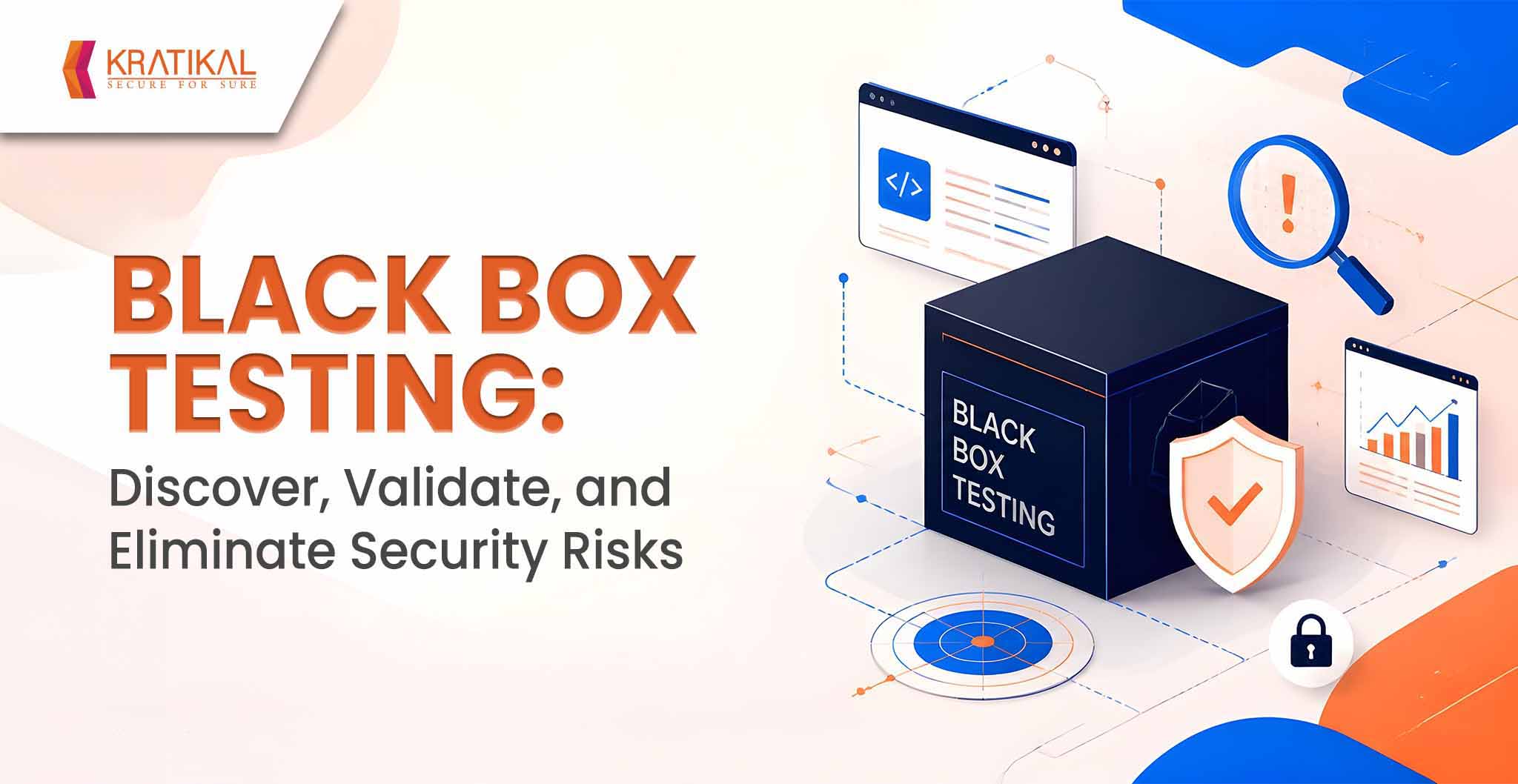
Cyberattacks rarely begin with insider knowledge. Threat actors don’t have access to your application’s source code, architecture diagrams, or internal documentation. Instead, they rely on publicly available information, exposed services, and vulnerabilities they can discover from the outside. This is exactly the perspective that black box testing replicates.
Black box testing is one of the most practical approaches to security testing because it evaluates an application the same way an attacker would. Rather than assuming what vulnerabilities exist, it uncovers what can actually be exploited from an external viewpoint. For organizations building web applications, APIs, mobile apps, or cloud-based platforms, the testing provides valuable insight into real-world security risks before attackers find them.
Why Black Box Testing Should Be Part of Your Security Strategy?
An effective security strategy goes beyond deploying firewalls, endpoint protection, and monitoring tools. It should also include regular testing to validate whether your security controls can withstand real-world attacks. Black box testing plays a critical role by assessing your internet-facing systems from an attacker’s perspective and uncovering vulnerabilities before they can be exploited. Every internet-facing system expands your attack surface. Without regularly testing these exposed assets, organizations risk leaving vulnerabilities that attackers can easily discover and exploit.
IBM’s Cost of a Data Breach Report 2024 found that the average global cost of a data breach reached USD 4.88 million, while the Verizon Data Breach Investigations Report (DBIR) continues to identify externally exploited vulnerabilities as one of the leading causes of breaches.
The testing helps organizations identify exploitable weaknesses, validate the effectiveness of their security controls, and strengthen their overall security posture. It also supports compliance with frameworks such as the DPDP Act, ISO 27001, PCI DSS, and RBI/SEBI guidelines by demonstrating a proactive approach to security testing.
How Black Box Testing Actually Works?
A structured testing approach is followed that unfolds across the following phases:
- Reconnaissance and Information Gathering:
Testers gather everything publicly available about the target, domain records, subdomains, exposed IP ranges, employee information on social media, technology stack fingerprinting, and any data leaked in prior breaches. This mirrors exactly what a real attacker does before launching an attempt.
- Scanning and Enumeration:
Using tools to identify open ports, running services, application endpoints, and potential entry points, testers build a map of the attack surface without ever touching internal documentation.
- Vulnerability Identification:
Testers probe for weaknesses in outdated software versions, misconfigured servers, weak authentication mechanisms, injectable input fields, and exposed administrative panels, using the same techniques attackers use to identify low-hanging fruit.
- Exploitation:
This is where black box testing distinguishes itself from a simple vulnerability scan. Testers actively attempt to exploit identified weaknesses to determine real-world impact: Can they gain unauthorized access? Escalate privileges? Move laterally? Exfiltrate data? This step reveals whether a theoretical vulnerability translates into an actual, exploitable risk.
- Reporting:
Once access is achieved, testers document the extent of compromise possible, what data was reachable, what systems were exposed, and how far an attacker could realistically go. The final report translates technical findings into business risk, prioritized by severity and exploitability, with clear remediation guidance.
Explore our Black Box Testing services to proactively identify and remediate exploitable vulnerabilities.
Join our weekly newsletter and stay updated
The Business Case: Why Organizations Should Care
This type of testing delivers measurable business value by reducing cyber risk, strengthening resilience, and supporting regulatory compliance.
- It validates detection, not just prevention. Black box testing reveals whether your SOC and monitoring tools actually catch an in-progress attack, not just whether firewalls are configured correctly.
- Exposes shadow IT and forgotten assets. Testers frequently discover exposed subdomains, legacy applications, or forgotten cloud instances that internal teams didn’t know were still live, a common source of breaches.
- Benchmarks real-world exploitability. A vulnerability scanner might flag hundreds of findings; black box testing shows which of those findings an attacker could actually weaponize, helping prioritize remediation where it matters most.
- Builds regulatory and customer trust. Enterprise clients and regulators increasingly ask for independent, third-party penetration testing evidence before signing contracts or granting compliance certifications.
Common Vulnerabilities Uncovered Through Black Box Testing
Across engagements, certain categories of weaknesses surface repeatedly, closely mirroring the OWASP Top 10 for web applications:
- Broken access control and privilege escalation paths
- Injection flaws (SQL, command, and NoSQL injection)
- Security misconfigurations in exposed servers and cloud storage
- Weak or default authentication credentials
- Outdated software and unpatched components with known CVEs
- Sensitive data exposure through unsecured APIs
OWASP’s research consistently ranks broken access control and injection-based flaws among the most frequently identified and highest-impact vulnerability classes in real-world testing, underscoring why these categories remain a constant focus in black box assessments.

Book Your Free Cybersecurity Consultation Today!
Conclusion
The question isn’t whether attackers can see your internet-facing systems; it’s whether you’ve identified the weaknesses before they do. Black box testing provides that critical insight by evaluating your applications, APIs, and infrastructure from an attacker’s perspective, revealing vulnerabilities that could lead to real-world compromise.
By simulating real attack scenarios, black box testing validates the effectiveness of your security controls, uncovers exploitable risks, and helps prioritize remediation based on actual business impact rather than assumptions. It also strengthens compliance efforts and demonstrates a proactive approach to managing cyber risk.
As attack surfaces continue to expand and threats become more sophisticated, black box testing is no longer just a security assessment; it’s a strategic investment in building a resilient security posture and staying one step ahead of hackers.
FAQs
- Is black box testing suitable for cloud environments?
Yes. Black box testing can assess internet-facing cloud assets, including web applications, APIs, virtual machines, storage services, and exposed endpoints, to identify vulnerabilities that attackers could exploit.
- Can black box testing detect business logic flaws?
Yes. Unlike automated vulnerability scanners, black box testing can uncover business logic vulnerabilities such as authentication bypasses, privilege escalation, insecure workflows, and transaction manipulation through manual testing.
- What information is required before starting a black box test?
Since black box testing simulates an external attack, testers require minimal information, typically the target URL, domain name, or public IP address. They do not need access to source code or internal documentation.
- Does black box testing replace vulnerability scanning?
No. Black box testing complements vulnerability scanning. While scanners identify potential weaknesses, black box testing validates whether those weaknesses are exploitable and assesses their real-world business impact.
- How does black box testing improve an organization’s security posture?
Black box testing helps organizations identify exploitable vulnerabilities, validate security controls, prioritize remediation efforts, and reduce the likelihood of successful cyberattacks by addressing risks before threat actors can exploit them.
- What role does reconnaissance play in black box testing?
Reconnaissance is the first phase of black box testing, where testers gather publicly available information about the target to understand its external attack surface and identify potential entry points.