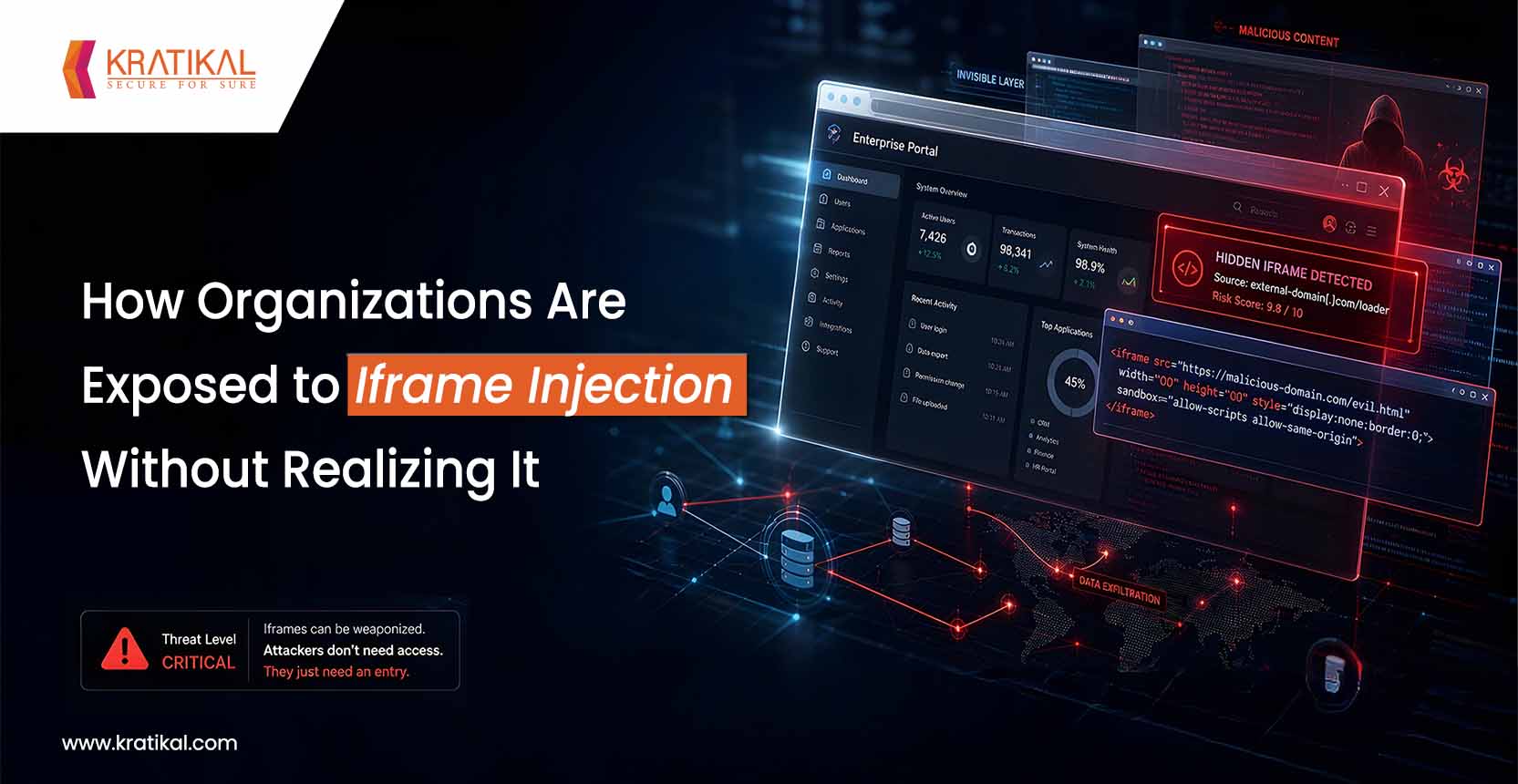
Iframe, short for an inline frame, is commonly used to embed content from another webpage into a site seamlessly. While this functionality enhances user experience, it also introduces a significant security risk when exploited by attackers. In an iframe injection attack, malicious actors insert hidden iframes or inject code into a webpage or URL, tricking users into interacting with a fake interface that appears legitimate.
For instance, you might visit your bank’s website and enter your credentials into what looks like a normal login form, unaware that it is actually a malicious iframe designed to capture your information, much like a card skimmer placed over a genuine payment terminal to steal card details.
Consider a scenario where you receive an email from your financial institution urging you to review an issue with your account. The message includes a link that directs you to what appears to be the official banking site. You proceed to log in, noticing nothing suspicious. However, behind the scenes, a malicious iframe has been injected into the page, silently intercepting your username and password. Despite the seamless and convincing experience, your sensitive data has already been compromised, highlighting how deceptive and risky iframe injection attacks can be for organizations and their customers.
Why Iframe Injection Often Goes Unnoticed?
Several factors make iframe injection difficult to identify, allowing attackers to exploit organizations without drawing immediate attention.
- Hidden in Plain Sight
Injected iframes are usually designed to be invisible. Attackers manipulate their size (for example, setting width and height to zero) or position them off-screen so they remain unnoticed by users and administrators. Hackers often embed malicious iframes deep within a website’s source code, making them difficult to detect manually. Attackers may also obfuscate the code or dynamically load the iframe only under specific conditions, such as when a user visits from a particular region or device. Because the website continues to appear legitimate and fully functional, organizations often fail to recognize that malicious content is silently running in the background.
- No Immediate Functional Impact
Unlike disruptive attacks such as DDoS or ransomware, iframe injection does not usually interrupt website operations. Pages load normally, applications continue functioning, and users rarely experience obvious technical issues. This lack of immediate disruption gives attackers a significant advantage, allowing them to maintain persistence for extended periods. Organizations may unknowingly host malicious iframes for weeks or even months before discovery. During this time, attackers can silently collect credentials, redirect users to phishing pages, or distribute malware without triggering urgent security investigations.
- Trusted Website Exploitation
Since the injection occurs within legitimate and trusted websites, users are far more likely to interact with malicious content without suspicion. Hackers take advantage of the trust organizations have built with their customers, employees, or partners. When users access a familiar website, they assume the environment is secure, making them less cautious about entering sensitive information. Attackers can exploit this trust to launch phishing attacks, steal payment details, or execute malicious scripts directly through the embedded iframe. This makes iframe injection particularly risky for industries handling sensitive customer data, such as banking, healthcare, and e-commerce.
- Limited Monitoring of Client-Side Behavior
Many organizations prioritize server-side security measures such as firewalls, endpoint protection, and intrusion detection systems, but often overlook threats operating within the browser. Iframe injection primarily targets the client side, carrying out malicious activity after the user’s browser loads the page. Traditional security tools may not have visibility into these browser-level interactions, especially if the injected iframe communicates with external domains over encrypted channels. In some cases, iframe injection can also contribute to browser hijacking, where users are silently redirected to malicious websites, fake login pages, or unwanted advertisements without their knowledge. In addition, organizations may lack runtime monitoring tools capable of detecting suspicious script execution or unauthorized iframe activity. This visibility gap allows attackers to operate quietly while bypassing conventional security controls.

Book Your Free Cybersecurity Consultation Today!
Common Entry Points for Iframe Injection
Organizations are often exposed to iframe injection through multiple overlooked vulnerabilities that attackers exploit to silently compromise websites and web applications.
- Vulnerable Web Applications
Outdated software, unpatched plugins, and insecure coding practices can allow attackers to inject malicious code into web pages. Input fields that are not properly sanitized are a common target, especially in applications vulnerable to cross-site scripting (XSS) or code injection attacks. Attackers can exploit these weaknesses to embed hidden iframes that redirect users to malicious domains or load harmful scripts in the background. In many cases, organizations continue running legacy applications without regular security testing, increasing the risk of iframe-based exploitation.
- Third-Party Script Compromise
Modern websites heavily depend on third-party scripts for analytics, advertising, chat support, payment processing, and other functionalities. If any of these external sources are compromised, attackers can indirectly inject malicious iframes into trusted websites. Since these scripts often run with elevated permissions in the browser, a single compromised vendor can simultaneously expose thousands of websites. Organizations may also lack visibility into how third-party scripts behave after deployment, making detection significantly more difficult.
- Supply Chain Attacks
Attackers may compromise a vendor, hosting provider, marketing platform, or service provider that has access to the organization’s website or infrastructure. This indirect attack route often bypasses traditional security controls because the malicious activity originates from a trusted source. Supply chain attacks are particularly risky because they can affect multiple organizations simultaneously. By exploiting a single trusted partner, attackers can distribute iframe injections across a wide network of websites while remaining difficult to trace.
- Misconfigured Security Policies
Lack of a properly implemented Content Security Policy (CSP) or weak browser security configurations can allow unauthorized iframe sources to load without restriction. Organizations that fail to restrict external content sources increase the likelihood of malicious iframe execution within their applications. Misconfigured permissions, insecure HTTP headers, and inadequate script validation mechanisms can further weaken browser-level defenses. Without strict security policies in place, attackers can exploit these gaps to inject hidden iframes that operate silently within the user’s browser session.
What if a hidden iframe is silently compromising your website? Kratikal helps organizations detect and stop invisible web threats before they escalate.
Best Practices to Prevent Iframe Injection
Organizations can significantly reduce the risk of iframe injection by implementing proactive security controls, continuous monitoring, and secure development practices across their web environments.
- Implement Strong Input Validation
Sanitize and validate all user inputs to prevent attackers from injecting malicious code into web pages. This is especially critical for forms, search fields, comment sections, and user-generated content areas where unsanitized input can lead to cross-site scripting (XSS) vulnerabilities. Organizations should adopt secure coding practices and implement input filtering mechanisms to block unauthorized scripts, HTML tags, and embedded content before the application processes them.
- Regular Security Testing
Conduct frequent vulnerability assessments and penetration testing (VAPT) to identify security weaknesses before attackers can exploit them. Security testing should include both server-side and client-side assessments to uncover hidden vulnerabilities related to iframe injection, insecure scripts, and browser-based threats. Automated scanning combined with manual testing can help organizations detect misconfigurations, vulnerable plugins, and insecure coding practices that may otherwise go unnoticed.
- Monitor File Integrity
Use file integrity monitoring solutions to detect unauthorized changes in website files, templates, scripts, or configuration settings. Attackers often modify website source code to insert hidden iframes that remain active for long periods without detection. Continuous monitoring enables security teams to identify suspicious modifications quickly and respond before malicious content impacts users. Maintaining secure backups can also help organizations restore compromised files efficiently.
- Keep Systems Updated
Regularly update web servers, CMS platforms, plugins, frameworks, and software libraries to patch known vulnerabilities. Attackers frequently exploit outdated applications and unsupported plugins to gain unauthorized access and inject malicious iframes into websites. Organizations can reduce exposure to known exploits and emerging threats by establishing a structured patch management process that applies security fixes promptly.
Join our weekly newsletter and stay updated
Conclusion
Iframe injection remains one of the most overlooked yet dangerous web-based threats affecting organizations today. Because these attacks operate silently within trusted websites and often leave little visible evidence, businesses may remain compromised for extended periods without realizing it. From credential theft and payment skimming to browser hijacking and malware delivery, iframe injection can expose organizations to serious financial, operational, and reputational damage.
As modern websites increasingly rely on third-party scripts, embedded content, and complex web applications, the attack surface for iframe-based threats continues to expand. This makes it essential for organizations to move beyond traditional security approaches and adopt proactive measures such as secure coding practices, continuous monitoring, regular VAPT assessments, strong security policies, and real-time threat detection. Ultimately, preventing iframe injection is not just about protecting websites; it is about safeguarding customer trust, sensitive data, and the overall integrity of digital operations.
FAQs
- Why is iframe injection risky for organizations?
Iframe injection can lead to credential theft, payment skimming, malware infections, browser hijacking, and reputational damage while remaining difficult to detect.
- What are the signs of an iframe injection attack?
Unexpected redirects, suspicious pop-ups, unusual outbound traffic, unauthorized code changes, and browser hijacking behavior can indicate iframe injection activity.
- How can organizations prevent iframe injection attacks?
Organizations can reduce risk through secure coding practices, regular VAPT assessments, Content Security Policies (CSP), file integrity monitoring, and continuous security monitoring.