
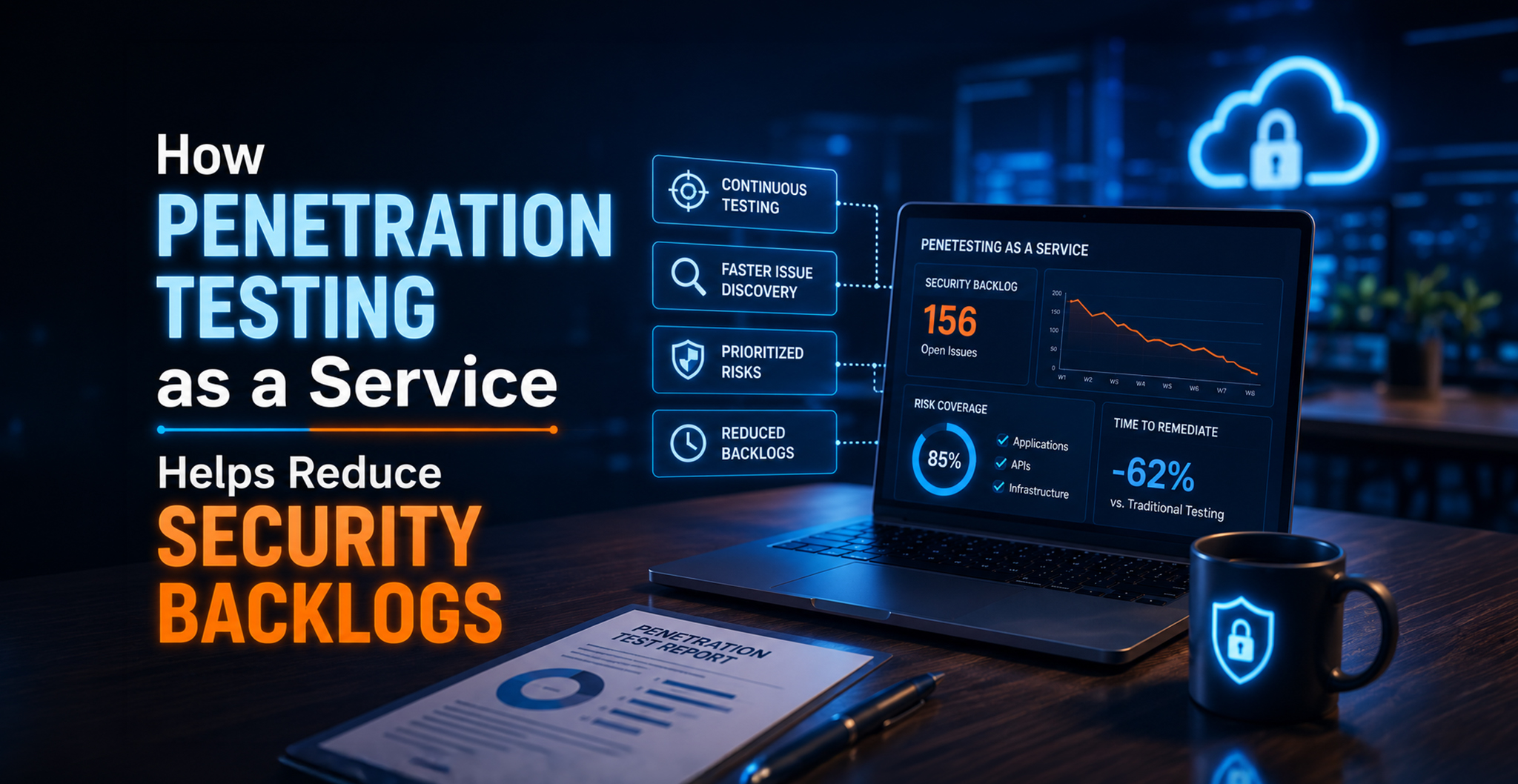
Security teams today face a challenge that grows substantially more every month: vulnerability backlogs. Rapid development, proliferation of application programming interfaces (APIs), continuous deployment of cloud applications, and increased adoption of third-party integrations generate a growing stream of security findings. Investments in security tools fail to keep pace with organizations’ remediation efforts.
Traditional penetration testing is not designed to meet the fast pace of today’s work. Traditional penetration testing is performed infrequently, usually once or twice a year. This creates a loop in which security teams are always playing catch-up to work that they should be continually performing in order to improve the efficiency and efficacy of the work that they perform.
Penetration Testing as a Service offers a different approach. It integrates human-led pentesting, along with continuous AI validation and real-time reporting, in a service designed to help organizations proactively address a broader range of security risks.
Security Backlogs Continue to Increase – How Can Penetration Testing as a Service Help?
According to the 2024 Verizon Data Breach Investigations Report, vulnerability exploitation accounted for 14% of breaches, nearly tripling compared to previous years. This clearly shows how quickly unaddressed vulnerabilities become exploitable security concerns, and how the risk associated with backlogs of unaddressed vulnerabilities can quickly grow out of control.
Penetration Testing as a Service refers to a modern testing model that utilizes automated testing and ongoing validation and monitoring. Unlike traditional testing engagements, which occur at infrequent intervals, Penetration Testing as a Service offers continued risk visibility to organizations.
Continuous monitoring of an organization’s security posture allows an organization to track the completion of security controls and remediation, as well as verify the effectiveness of the remediation. The model is ideally suited for organizations that release software regularly or operate large cloud environments where new vulnerabilities can appear at any moment.
How Does Penetration Testing as a Service Help Decrease Security Backlogs?
- Continuous Discovery of Vulnerabilities
One of the greatest benefits of using Penetration Testing as a Service is continuous testing. Instead of waiting months for the next engagement, organizations receive ongoing visibility into security weaknesses. PTaaS helps identify vulnerabilities earlier through efficient prioritization.
- Shorter Timelines for Risk Prioritization
Not every vulnerability represents the same level of risk. Security teams must be able to identify which vulnerabilities, if any, require immediate remediation and which can be remediated at a later time. PTaaS helps determine the order in which the issues must be addressed.
- Shorter Time Periods for Verifying Security Fixes
Verification of remediation efforts typically consumes considerable time. After a vulnerability is addressed, a security team has to confirm that the vulnerability no longer exists. Manual verification increases the time pulled away from the remediation process. Many PTaaS platforms encourage automated testing, providing support for the validation of fixes and the closure of findings more efficiently.
- Faster Validation of Fixes
Penetration Testing as a Service includes faster security decision-making, faster vulnerability remediation, and improved strategic security posture for organizations.
- Better Resource Optimization
Security analysts spend less time processing spreadsheets and more time on strategic security tasks, such as analyzing delicate security risks. Security analysts can shift their focus.
Instead of processing spreadsheets, coordinating reports, and tracking remediation manually, security analysts can now work on strategic security initiatives and high-risk vulnerabilities that require expert attention.
Security Penetration Testing Services deliver significant operational benefits for organizations that are adopting these services. Some of the operational benefits include continuous security visibility, reduced attack surface, improved compliance readiness, and better collaboration between teams.
How Penetration Testing as a Service Accomplishes DevSecOps?
Modern development teams release updates rapidly. Security testing must keep pace with these release cycles. Penetration Testing as a Service aligns naturally with DevSecOps practices because it integrates security testing into the development lifecycle.
This solution has many advantages:
- Reduced expenses due to reduced remediation
- Shorter development cycles
- Enhanced quality of software
- Reduced risk of deployment
- Security becomes a continuing activity rather than a final one.
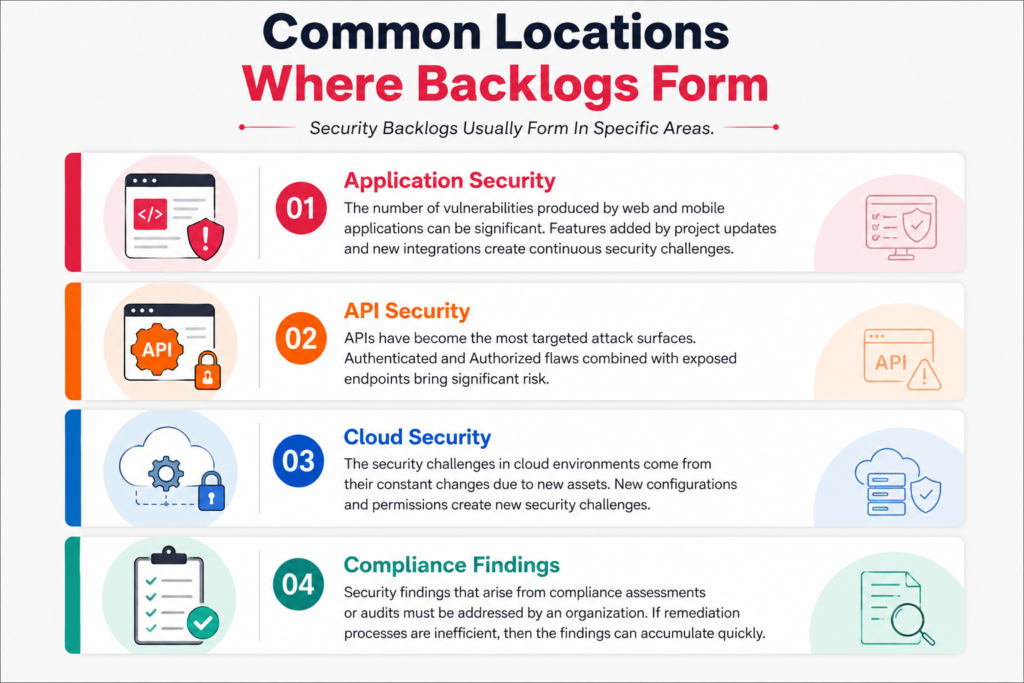
Common Locations Where Backlogs Form
Security backlogs usually form in specific areas:
- Application Security
The number of vulnerabilities produced by web and mobile applications can be significant. Features added by project updates and new integrations create continuous security challenges.
- API Security
APIs have become the most targeted attack surfaces. Authenticated and Authorized flaws combined with exposed endpoints bring significant risk.
- Cloud Security
The security challenges in cloud environments come from their constant changes due to new assets. New configurations and permissions create new security challenges.
- Compliance Findings
Security findings that arise from compliance assessments or audits must be addressed by an organization. If remediation processes are inefficient, then the findings can accumulate quickly.
Best Guidelines for Increasing PTaaS Success
For businesses to achieve better results, security testing has to be activated across daily operations as opposed to standing alone. Security teams should prioritize action items with the highest level of business risk impact and should also monitor the status of those action items.
Adding testing to workflow developments helps developers close security gaps, which, in turn, reduces the workload required to close security gaps and also helps to improve the overall efficiency of the workflow.
How AutoSecT Helps Reduce Security Backlogs Through Penetration Testing as a Service
Managing risks manually can slow remediation efforts and create security backlogs. AutoSecT, along with Kratikal’s advanced Penetration Testing as a Service (PTaaS), helps organizations address these challenges fast and effectively.
AutoSecT performs automated vulnerability assessments across web applications, mobile applications, APIs, cloud assets, and networks. The platform also integrates with tools such as Jira, Slack, Microsoft Teams, and Google Chat, helping teams collaborate efficiently throughout the remediation process.
Beyond vulnerability detection, AutoSecT simplifies compliance and reporting. Organizations can generate password-protected reports, professionally branded reports, online verifiable VAPT certificates, and vendor security assessment reports from a single platform.
The platform has already proven its effectiveness at scale. AutoSecT identified more than 1.2 million vulnerabilities annually and has helped secure over 1,150 web applications, 750+ mobile applications, 2,200+ cloud assets, and 6,000+ APIs.
Backed by Kratikal’s cybersecurity expertise, AutoSecT helps organizations reduce security backlogs, improve visibility into risks, strengthen security posture, and make penetration testing faster, more efficient, and scalable.
Conclusion
It has become even more difficult to manage all vulnerabilities a business has to deal with, as that business continues to expand its digital ecosystem. For security teams to maintain a competitive edge over threats and dangers, security teams need advanced systems and solutions that provide them immediate visibility into security vulnerabilities and remediation efforts, as well as the ability to prioritize and validate the actions taken by security automation.
FAQs
- What are the best guidelines to maximize success with using PTaaS?
Penetration Testing as a Service is a continuous security testing model that combines automated scanning, expert validation, monitoring, and centralized reporting.
- What are the differences between traditional penetration testing and continuous PTaaS?
Traditional testing is performed periodically, while Penetration Testing as a Service provides ongoing visibility into vulnerabilities and remediation progress.
- How does PTaaS help reduce vulnerability backlogs?
Continuous PTaaS allows an organization to maintain continuous visibility into security vulnerabilities and the ongoing efforts to remediate security vulnerabilities.
- Is PTaaS suitable for cloud environments?
Yes. PTaaS helps detect cloud environment risks, including misconfigurations, risks associated with excessive permissions, and risks posed by exposed services. Continuous assessments provide real-time risk detection and prioritization to enable quick remediation before threats can exploit the risks.
- Can PTaaS improve compliance readiness?
Yes. Continuous testing helps organizations recognize and remediate security concerns that may impact compliance needs.
- Does PTaaS replace manual penetration testing?
No. The best approach combines human-led pentesting and continuous AI validation.
- Why is continuous security testing important?
Continuous testing helps organizations recognize and remediate security concerns before they can be exploited. This not only reduces exposure windows, but also enables quick threat remediation.