


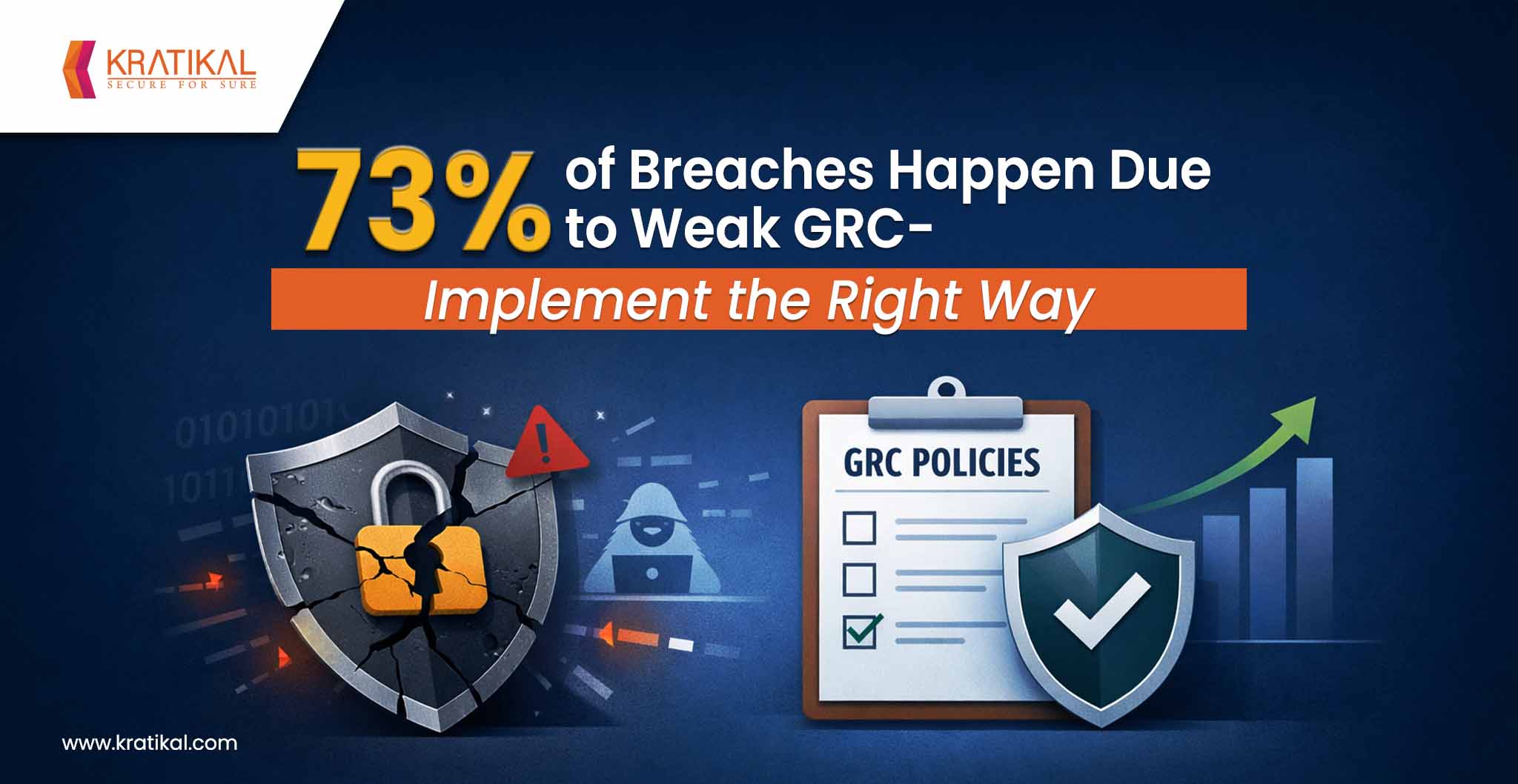
Most organizations assume breaches happen because of sophisticated zero-day exploits or highly advanced attackers. The reality is far less dramatic and far more risky. Nearly 73% of breaches stem from weak Governance, Risk, and Compliance (GRC) practices. This means attackers are not breaking in, they’re walking through open doors created by poor risk visibility, weak controls, and ineffective compliance execution. The uncomfortable truth? Most breaches are preventable.
Recent findings highlight a growing sense of urgency. According to the Q4 2025 GC Risk Index by Diligent Institute and Corporate Board Member, legal and compliance leaders now rate overall business risk at 7.9 out of 10, a 16% rise compared to Q1. Among these concerns, technology-related risks lead the way, with 60% of respondents identifying them as a primary threat, significantly ahead of economic risks (33%) and tariffs (23%).
Amid these escalating regulatory, technological, and geopolitical challenges, adopting an integrated approach to governance, risk, and compliance (GRC) is no longer a choice but a necessity. Organizations operating in isolation often remain reactive, addressing issues only after they arise instead of proactively preventing them.
Table of Contents
What are the Signs of a Weak GRC Strategy?
A poorly structured approach can lead to a range of operational and strategic challenges. Such a strategy is often characterized by fragmented activities and inefficient processes, including:
- Undefined or unclear objectives
- Inadequate oversight and governance
- Limited access to critical information
- Siloed teams and disconnected functions
- Elevated operational costs
- Significant duplication of efforts
- Wasted resources, data, and insights
- Unnecessary complexity across processes
The Downsides of a Poorly Planned Strategy
An ineffective strategy can expose organizations to heightened risks, inefficiencies, and increased operational strain.
- Lack of Risk Visibility
A weak GRC strategy significantly limits an organization’s ability to identify, assess, and monitor critical risks across its operations. Without centralized dashboards, real-time insights, and integrated risk intelligence, threats often remain hidden within different departments. This lack of visibility prevents proactive risk mitigation, causing organizations to react only after incidents occur, often when the damage is already substantial.
- Increased Costs and Resource Waste
Disjointed processes result in duplicated efforts, redundant tools, and inefficient allocation of resources. Multiple teams may unknowingly perform the same risk assessments or compliance checks, leading to unnecessary expenditure. Additionally, the absence of streamlined workflows increases manual effort, driving up operational costs while delivering limited value.
- Poor Risk-Based Decision Making
Without an integrated framework, organizations struggle to align business decisions with their risk exposure. The inability to measure risk-adjusted performance means leaders lack the context needed to prioritize initiatives or allocate resources effectively. This often leads to decisions that either overlook critical risks or overcompensate, both of which can negatively impact business outcomes.
- Inability to Scale with Growth
As organizations grow, the complexity of managing governance, risk, and compliance increases exponentially. A poorly planned strategy fails to adapt to this growth, resulting in gaps in compliance, increased regulatory scrutiny, and higher exposure to risks. Without scalable frameworks and processes, businesses may find that expansion comes at the cost of operational control, compliance integrity, and long-term sustainability.
High-Risk GRC Failures and Their Impact
Below is a breakdown of common failures and how they translate into security risks:
| GRC Weaknesses | What Goes Wrong | Security Impact | Business Consequence |
| Weak Access Governance | Excessive or outdated permissions | Privilege escalation, data exposure | Unauthorized data access |
| Lack of continuous monitoring | Controls not validated in real-time | Undetected breaches | Delayed Incident Response |
| Poor Vulnerability Management | Unpatched systems and unknown assets | Exploitable entry points | Increased attack surface |
| Ineffective policy enforcement | Policies exist but are not followed | Inconsistent security practices | Compliance violations |
| Third-party risk mismanagement | Vendors with weak security controls | Supply chain attacks | Regulatory penalties, reputational loss |
| Audit-centric compliance | Focus only on passing audits | Temporary or superficial controls | False sense of security |
| No incident readiness | Lack of response planning | Slow containment | Higher breach costs |
Key GRC Implementation Steps
Implementing GRC effectively requires a structured and strategic approach. The following steps can help organizations build a strong and sustainable compliance program:
1. Evaluate your current state and set clear objectives
Start by assessing your existing compliance practices to identify gaps and weaknesses. Understand the risks your organization currently faces, along with potential emerging threats. At the same time, consider the regulatory requirements applicable to your business. This assessment will help define clear goals and establish a governance, risk, and compliance strategy aligned with overall business objectives.
2. Choose the right framework(s)
Select one or more GRC frameworks that best suit your organization’s industry, size, and complexity. Instead of a one-size-fits-all approach, customize the chosen frameworks to meet your specific operational and regulatory needs.
3. Build policies, procedures, and controls
Develop or refine policies and procedures based on the selected frameworks. These policies should serve as the foundation for designing internal controls that effectively reduce risks and ensure compliance across the organization.
4. Continuously monitor and improve
GRC is not a one-time effort. Regularly monitor risks, evaluate control effectiveness, and track compliance status. Conduct periodic audits and assessments to uncover new risks or gaps, and use these insights to continuously enhance policies, controls, and processes.
Why Organizations Need Governance, Risk, and Compliance?
Organizations today operate in a dynamic and increasingly complex business environment. Whether in large enterprises, government bodies, small businesses, or nonprofits, they encounter a wide range of challenges, including:
- Frequent changes in regulations and enforcement that directly impact business operations
- Rising stakeholder expectations for strong performance, sustained growth, and greater transparency
- Increasing costs associated with compliance management and risk mitigation
- Expansion of third-party relationships, bringing added governance and oversight challenges
- Potential legal and financial repercussions due to inadequate oversight and failure to identify critical risks
Many organizations assume that implementing or creating a dedicated department will address all their challenges. However, an effective strategy goes beyond roles. A successful approach requires:
- Clearly establishing objectives that align with your organization’s goals
- Enabling seamless communication so critical information reaches the right stakeholders at the right time
- Implementing and maintaining effective controls and actions to manage risks and meet compliance requirements
Conclusion
Weak governance, risk, and compliance are no longer just operational gaps; they directly enable security breaches, financial losses, and reputational damage. The fact that a majority of breaches stem from preventable governance, risk, and compliance failures highlights a critical reality: organizations are not losing to sophisticated attackers, but to their own fragmented processes, lack of visibility, and ineffective risk management practices.
As regulatory pressures intensify and technology risks continue to evolve, organizations can no longer afford to treat governance, risk, and compliance as isolated functions. A reactive, siloed approach only increases exposure and slows response times, making it easier for threats to go undetected and unaddressed.
The path forward lies in building an integrated, scalable, and intelligence-driven governance, risk, and compliance strategy, one that aligns with business objectives, enables real-time risk visibility, and enforces consistent controls across the organization.
FAQs
- What are some common examples of GRC risks?
Common GRC risks include regulatory non-compliance, data privacy breaches, cybersecurity incidents, and third-party vendor failures. Weak internal controls can expose organizations to operational inefficiencies and legal and financial risks.
- What are the commonly used controls in a GRC framework?
Typical GRC controls include access management, enforcement of policies, internal audits, risk assessments, incident reporting processes, and continuous monitoring to ensure adherence to regulatory requirements and internal standards.
- What is the process for implementing a GRC program?
Implementing a GRC program involves establishing governance structures, identifying key risks and regulatory requirements, and developing appropriate policies and controls. It also includes assigning clear ownership and leveraging technology to continuously monitor and report on risk and compliance activities.



Leave a comment
Your email address will not be published. Required fields are marked *