

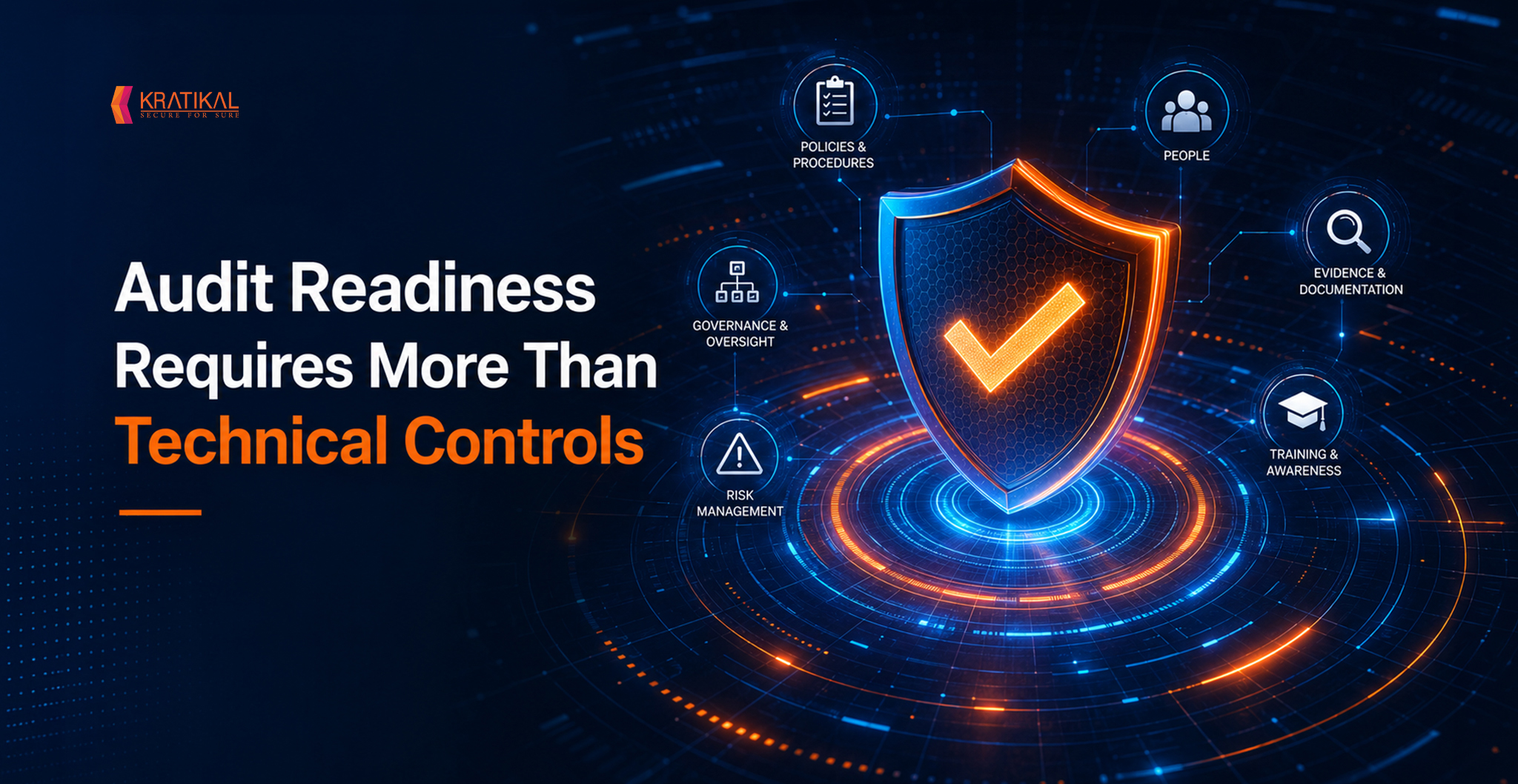
Today, businesses pay enormous amounts of money for cybersecurity equipment, firewalls, endpoint protection, access controls, and monitoring systems. While these technical protections are necessary, they constitute just one component of an effective audit strategy. It is a great disappointment to many businesses when they fail a compliance assessment, even though they have sophisticated security measures in place. This is because auditors evaluate far more than technical controls. They look into governance, risk management, documentation, policies, employee awareness, incident response procedures, vendor management, and continuous security monitoring. The global average cost of a data breach reached USD 4.44 million in 2025, according to IBM’s Cost of a Data Breach Report 2025. It is in this regard that virtual CISO consulting services have become increasingly valuable. A strategic security leadership approach will ensure that businesses are adequately prepared to deal with audits rather than only trusting technology.
In this article, we will examine why audit readiness goes beyond technical controls, as well as how companies may enhance their compliance activities with the appropriate cybersecurity leadership.
Table of Contents
- 0.1 Understanding Audit Readiness
- 0.2 The Common Misconception: Security Tools Equal Compliance
- 0.3 Why Governance Matters During Audits
- 0.4 Documentation: The Most Overlooked Audit Requirement
- 0.5 Risk Management Is A Critical Audit Focus
- 0.6 Employee Awareness Is More Important Than Ever
- 0.7 Incident Response Readiness Impacts Audit Outcomes
- 0.8 Third-Party Risk Management Cannot Be Ignored
- 0.9 The Role Of Leadership In Compliance Success
- 0.10 How Kratikal Helps Businesses Achieve Audit Readiness
- 1 Get in!
Understanding Audit Readiness
Audit readiness refers to the capability of a business to demonstrate the process of security, compliance, as well as risk management of these activities that comply with the regulations and industry standards. Whether preparing for ISO 27001, SOC 2, HIPAA, PCI DSS, NIST, or other frameworks, auditors typically evaluate:
- Security policies and procedures
- Risk assessment processes
- Asset management practices
- Employee security awareness programs
- Incident response planning
- Vendor risk management
- Data protection controls
- Governance structures
- Documentation and evidence collection
- Continuous monitoring processes
It is significant to have proper technology controls, but the auditors also require assurance that there is good security throughout the business. This is the reason why numerous organizations invest in virtual CISO consulting services to ensure that the gap between implementation and compliance management is eliminated.
Book Your Free Cybersecurity Consultation Today!

The Common Misconception: Security Tools Equal Compliance
A lot of businesses believe that purchasing cybersecurity solutions automatically makes them audit-ready. For Example, A Business May Have:
- Multi-factor authentication
- Endpoint detection and response tools
- Network firewalls
- Security monitoring solutions
- Encryption technologies
Although these controls enhance security, more questions on how the controls are designed are usually posed by auditors like:
- Who owns the security program?
- How frequently are risks assessed?
- How are policies reviewed and updated?
- What evidence supports employee training?
- How are third-party vendors evaluated?
- Is there executive oversight of cybersecurity risks?
Even secure businesses may encounter compliance issues in the absence of documented responses and other supportive documents. It is here that virtual CISO consulting services are useful in assisting organizations establish the governance structures auditors expect to see.
Why Governance Matters During Audits
A cybersecurity and compliance program is established based on governance. Auditors desire an assurance that there is no random security decision-making. Businesses are expected to adopt a systematic approach such that security efforts are aligned with business goals.
Strong Governance Typically Includes:
– Defined Security Responsibilities
Every security function should have clear ownership. The roles of the employees, managers, IT teams, and the leadership should be clearly understood.
– Security Policies
Policies demonstrate how the organization approaches cybersecurity risks. The policy documentation is of interest to auditors to determine compliance maturity.
– Executive Oversight
Cybersecurity is no longer simply an IT problem. The participation of leaders is essential to show accountability and strategic risk management. Virtual CISO consulting services are usually called on by businesses to develop governance structures that are in line with audit expectations and industry best practices.
Documentation: The Most Overlooked Audit Requirement
Inadequate documentation is one of the leading causes of audit findings. Most organizations carry out security activities but fail to document them properly.
Examples Include:
- Risk assessments conducted without formal records
- Employee training sessions lacking attendance logs
- Incident response testing without documented results
- Policy reviews completed without approval records
Auditors rely on evidence and not on oral explanations. A common saying in compliance forums is:
“If it isn’t documented, it didn’t happen.”
Effective virtual CISO consulting services are able to assist companies in developing documentation procedures that can lead to audit success as well as eliminate stress related to compliance.
Risk Management Is A Critical Audit Focus
The way businesses identify, assess, and deal with risk is becoming a special concern to auditors. Security decisions are also made based on business interests and not guesswork, as shown by risk management.
Key Elements Include:
– Risk Identification
Organizations are expected to have an effective list of security threats to the systems, data, and processes.
– Risk Evaluation
The risk should be classified according to probability and the possible effect.
– Risk Treatment
The identification of risks needs documented plans to mitigate, transfer, accept, or avoid business risks.
– Continuous Monitoring
Risk management is not a one-year affair, but it should be an ongoing process. Experienced providers of virtual CISO consulting services assist companies in putting in place formal risk management programs that are not only acceptable to auditors, but also to stakeholders.
One of them includes incorporating an AI-driven Pentest and VMDR platform that maps vulnerabilities detected with the necessary compliance to ensure your compliant status remains ‘intact’ every day and not only on the ‘audit’ day
Employee Awareness Is More Important Than Ever
Human-related security risks cannot be eliminated through only the use of technology. Employees handle sensitive information on a daily basis and thus form a very important part of the audit readiness. Auditors Often Examine:
- Security awareness training programs
- Employee onboarding processes
- Access management procedures
- Security communication initiatives
Even with strong technical controls, businesses that do not train their employees can be subject to audit issues. Virtual CISO consulting services would allow organizations to install and attain a structured awareness program that demonstrates ongoing commitment to security culture apart from training them.
Incident Response Readiness Impacts Audit Outcomes
Many businesses create incident response plans but never test them. Auditors Often Ask:
- Is there a documented incident response plan?
- When was it last reviewed?
- Has it been tested recently?
- Are responsibilities clearly assigned?
- Are lessons learned documented?
The presence of an outdated or untested incident response plan may cause doubts about an organization’s readiness. Strategic cybersecurity leaders will assist with up-to-date response plans that are tested and compliant with requirements. This is another area where virtual CISO consulting services provide significant value.
Third-Party Risk Management Cannot Be Ignored
The modern-day business heavily depends on vendors, cloud services, contractors, and technology partners. Third-party risk management practices are becoming more and more under scrutiny by auditors.
Important Areas Include:
- Vendor security assessments
- Contract security requirements
- Ongoing vendor monitoring
- Data handling agreements
- Supplier risk evaluations
A security breach at a vendor can result in sensitive information being leaked and this may lead to compliance problems. The virtual CISO consulting services provide organizations with more robust vendor management structures to support audit readiness and minimize external risks.
The Role Of Leadership In Compliance Success
Lack of executive-level ownership of cybersecurity can make compliance programs quite challenging. IBM’s report found that over 50 % of organisations reported significant cybersecurity staffing shortages, which led to higher average breach costs.
A number of small and medium-sized companies are not able to afford a full-time Chief Information Security Officer. However, they continue to require strategic leadership to steer security efforts. This has been a challenge. Thus, there comes the need for virtual CISO consulting services.
A Virtual CISO Provides:
- Security strategy development
- Compliance guidance
- Risk management oversight
- Executive reporting
- Audit preparation support
- Security program leadership
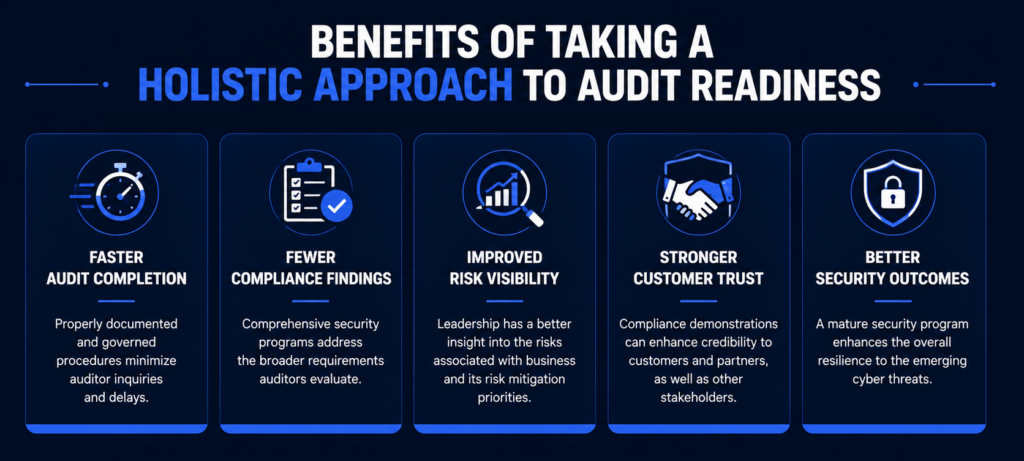
Businesses can considerably enhance audit results by bringing in knowledgeable cybersecurity leadership without the expense of having a full-time executive.
How Kratikal Helps Businesses Achieve Audit Readiness
Preparing for an audit requires more than deploying technology. It involves a concerted effort integrating governance, risk management, compliance skills, and security leadership. At Kratikal, our virtual CISO consulting services help businesses build mature cybersecurity programs that assist with both security and compliance goals.
Our Team Works Closely With Organizations To:
- Assess current security posture
- Identify compliance gaps
- Develop governance frameworks
- Strengthen risk management processes
- Create audit-ready documentation
- Improve incident response capabilities
- Establish executive reporting structures
- Enhance security awareness programs
Rather than taking a reactive approach, we assist businesses in developing sustainable compliance practices that become part of long-term growth. Our virtual CISO consulting services are created to deliver practical guidance, strategic oversight, and quantifiable enhancements without the expense of maintaining a full-time security executive.
Get in!
Join our weekly newsletter and stay updated
Conclusion
Technical controls are also an essential aspect of cybersecurity, but they are only one piece of the audit readiness puzzle. Auditors evaluate governance, risk management, documentation, awareness of the employees, response to the incident, vendor oversight, and executive responsibility as well as technical controls. The onset of the audit is likely to reveal loopholes in compliance in technology-centric businesses. A comprehensive strategy that incorporates both security leadership and operational discipline is critical to success in the long run. That is why many organizations are resorting to virtual CISO consulting services to enhance their compliance programs, ensure better governance, and prepare confidently for audits.
We at Kratikal facilitate businesses to move beyond checkbox compliance by building security programs that are audit-ready, resilient, and business goal-oriented. For us, audit readiness is not only a necessity as defined by legislation, but also a competitive element with the proper guidance.
FAQs
- What is audit readiness?
Audit readiness means that a business is prepared to show adherence to the security, the risk and regulation requirements. It leads to more seamless audits, less findings and better trust within stakeholders.
- Are technical controls alone enough for audit readiness?
No. Although auditors consider firewalls, endpoint protection and monitoring, they also assess governance, policy, employee awareness, incident response and documentation. An integrated method is required.
- How can virtual CISO consulting services help with audits?
Virtual CISO services deliver strategic leadership in cyber security. It helps businesses to develop governance, risk management, policy frameworks, documentation processes and employee training to be audit-ready.
- How can virtual CISO consulting services help with audits?
Virtual CISO services deliver strategic leadership in cyber security. It helps businesses to develop governance, risk management, policy frameworks, documentation processes and employee training to be audit-ready.
- How can virtual CISO consulting services help with audits?
Virtual CISO services deliver strategic leadership in cyber security. It helps businesses to develop governance, risk management, policy frameworks, documentation processes and employee training to be audit-ready.
- What role does governance play in compliance?
Governance helps to have structured, documented and object-oriented security decisions. Auditors seek enumerated roles, policy controls and executive responsibility.
- Why is documentation critical for audit success?
Auditors demand the presence of security activities. Revenue auditors can be unimpressed with even well-crafted technical controls without documented policies, risk assessments, training logs, or testing of incident response.
- Can all businesses afford a CISO?
Many companies can’t hire a full-time CISO. Cost-effective strategic leadership Virtual CISO consulting services provide an organization the ability to have audit readiness without the cost of hiring a full-time executive.
- How does risk management affect audit outcomes?
Proper risk management demonstrates to auditors that security decisions are made a priority, risks are minimized and processes are constantly monitored. This lessens the loopholes in compliance and enhances security stance.
- What makes Kratikal’s virtual CISO consulting services unique?
Kratikal offers custom-made advice that comprises governance, risk management, compliance skills and technical supervision. We assist companies in creating an audit-ready security program that is sustainable and can support long-term objectives.

Leave a comment
Your email address will not be published. Required fields are marked *