

Get a FREE Security Consultation
Overview : Web Application Testing
Web applications are the entry point for many confirmed data breaches, given that such occurrences occur on average 33 times per day. In the second quarter of last year, 94 million data records were leaked at the global level. Among the many vulnerabilities, SQL injection tops the chart, accounting for 23% of critical vulnerabilities in web applications.
Other common web application vulnerabilities include Credential Theft (31%), cloud vulnerabilities (82%), software exploitation, and ransomware, out of which 80% resulting in data encryption. SMBs with web applications are targeted more than 4x times compared to large organizations, as stated in the Verizon report. Web applications falling under the financial industry are highly vulnerable owing to the fact that it takes 177 days on average to identify a data breach.
Does Your Web App Qualify?
If your web app falls under this, you definitely need web app testing:

E-commerce Websites
Handle sensitive payment and personal data.

Banking/Financial Apps
Store financial data.

Healthcare Applications
Protecting personal health data.

Government & Legal Websites
Store PII and legal data.

Social Media Platforms
Manage user-generated content and personal data.

Enterprise Applications (SaaS, CRM, ERP)
Handle internal business operations and customer info.
What Organizations With Web Applications Actually Struggle With?


Your authentication trusts convenience over security
Modern web apps often let users register and log in with weak controls. Hackers exploit this with credential stuffing and brute force.
Your risk?
Account Takeover
Privilege Escalation
Data Theft
How We Solve:
Kratikal web application testing thoroughly examines authentication and session management, ensuring that weak points are identified and addressed.


Your input validation is inconsistent or missing
Many apps assume input is harmless and don’t validate properly server‑side. That opens doors for classic injection attacks.
Your risk?
SQL Injection
Cross‑Site Scripting (XSS)
Remote Code Execution
How We Solve:
Through our web app testing, we emulate common attack vectors to ensure data is properly sanitized before it reaches the backend, preventing malicious payloads from affecting the system.
Business logic trusts client‑side behavior
Web applications often enforce rules in the browser, assuming the user will behave “correctly.” However, will malicious actors play fair?
Hence, here’s what your risks are:
IDOR (Insecure Direct Object References)
Inventory / Financial Manipulation
Logic Abuse (free upgrades, fake credits)
How We Solve:
Our web application testing includes emulating real-world manipulation of client-side logic, testing how secure your business rules are against tampering.


Session and access controls are lax or poorly scoped
Organizations often issue long‑lived tokens, loosely scoped sessions, and insufficient role checks. Thus, meaning once someone gets “in,” they roam freely.
Your Risk?
Horizontal & Vertical Privilege Escalation
Session Hijacking
Data Exposure
How We Solve:
With our web app testing, we examine session management and access control to ensure robust protections are in place. We test session expiration, token validity, and access restrictions to ensure that users cannot escalate privileges or hijack sessions.
Your APIs assume the frontend is a safe gatekeeper
Teams build frontend UI and assume the backend API is only hit through approved screens. But, assumptions in a cyberword is a vulnerability in themselves. Because attackers hit APIs directly with crafted requests.
Your Risk?
API Abuse
Unauthorized Data Access
Broken Object Enumeration
How We Solve:
Our web application testing focuses on API security by directly testing API endpoints for vulnerabilities. We emulate direct API calls, ensuring that authentication, authorization, and rate-limiting are enforced on every endpoint.

Kratikal’s Web Application Testing
Advanced web app testing will keep you secure from vulnerabilities. Thus, to maximize the full potential of your web application with our rigorous testing methodology backed by professional expertise, we’ve highlighted everything you need to know:
What Do We Test?


Information Gathering & Configuration Management

Data Validation & Authentication

Session & Authorization Management

Secure Transmission & Cryptography

Risky Functionality Testing

Business Logic & Application Integrity

HTML5, Web Technologies & Web Messaging Security

Secure Transmission & Transport Layer Protection

Session Management & Handling

Authentication & Access Control

Information Gathering & Configuration Management
Data Validation & Authentication
Session & Authorization Management
Secure Transmission & Cryptography
Risky Functionality Testing
Business Logic & Application Integrity
HTML5, Web Technologies & Web Messaging Security
Secure Transmission & Transport Layer Protection
Session Management & Handling
Authentication & Access Control
How Do We Test?
Web Application Testing Methodology
Kratikal's comprehensive approach to performing penetration tests finds both security vulnerabilities and business logic vulnerabilities. Web application security methodology is based on the following industry standards -
- OWASP TOP 10
- OWASP WSTG v4.1
- OWASP Web App Security Quick Reference Guide
- OWASP Web App Security Verification Standard 4.0
- SANS 25
Kratikal provides on-premises and off-premises web application security testing services.


Web Application Testing Assessment Types


Black-Box Testing
Black-Box Testing, also known as functional or behavioral testing, checks how a web application works without looking at its internal code. It focuses only on what goes in (inputs) and what comes out (outputs), based on how the web app is supposed to behave.
At Kratikal, our Black-Box Penetration Testing process starts with collecting key information about your application. We use crawlers to scan all the website links and gather details about the visible elements on each page. Our expert team follows industry best practices to make sure your web application is tested thoroughly, just like a real-world attacker would.

Gray-Box Testing
Gray-Box Testing is a hybrid approach that combines elements of both Black-Box and White-Box testing. It’s used to evaluate a web application security with partial knowledge of its internal structure. While testers don’t have full access to the source code, they do understand key aspects like application workflows or architecture.
At Kratikal, our Gray-Box Penetration Testing approach begins with limited internal access such as low-level credentials, logic flow diagrams, or network infrastructure maps. Our experts leverage this information to simulate insider threats and advanced attack scenarios, ensuring a more comprehensive security assessment of your web application.
White-Box Testing
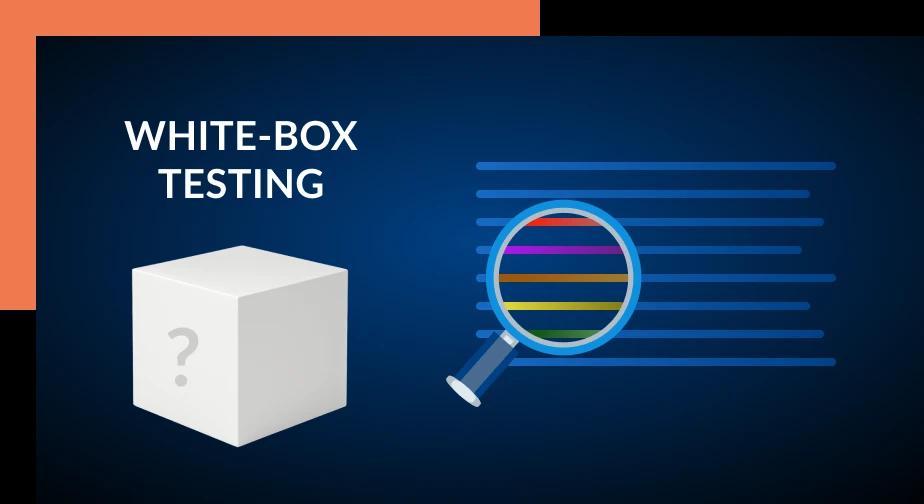
White-Box Testing, also known as clear box, glass box, or open box testing, examines the internal structure, code, and logic of a web application. This method allows testers to fully understand how the software works from the inside, validating input-output flows and ensuring the code behaves as intended.
At Kratikal, our White-Box Testing process includes detecting security flaws hidden deep within your source code. By analyzing the application’s architecture and logic, we help improve its design, security, and overall performance. Our expert team mimics advanced attack techniques used by bad actors, delivering in-depth reports that highlight critical vulnerabilities that are often missed.
Our Approach to Web Application Testing


Scope of Work
In mobile application security testing, this stage involves identifying the security measures already in place, testing goals, and areas containing sensitive information. At Kratikal, we ensure complete synchronization with the client at this stage, aligning on objectives, boundaries, and responsibilities. This mutual agreement safeguards both parties from legal complications while setting a solid foundation for a structured and effective assessment.
Intelligence gathering
The next step is acquiring a deep understanding of the mobile application’s architecture, design, and underlying technologies. This phase of mobile app testing goes beyond simple data collection. It involves analyzing the application’s overall design and scope to uncover potential risks. By gaining this comprehensive view early on, Kratikal ensures that subsequent testing is both precise and impactful.
Planning-Analysis
Once the groundwork is laid, we move into strategic planning and threat simulation. This phase focuses on designing a robust testing strategy to replicate real-world attack scenarios without disrupting live operations. With an exhaustive set of test cases tailored to mobile environments, we optimize the testing process to ensure maximum coverage and minimal risk. This careful planning allows us to anticipate challenges, emulate authentic threats, and prepare for effective vulnerability discovery.
Vulnerability Detection
This stage forms the core of the mobile application penetration test. Leveraging both Static Analysis and Dynamic Analysis, Kratikal systematically identifies vulnerabilities across the app. Custom scripts, designed around the business logic, are executed alongside manual testing to ensure accuracy and depth. Approximately 80% of the testing effort is concentrated here, as we uncover the most probable attack vectors and evaluate the security posture of both static components and dynamic behaviors.
Reporting
The final stage of mobile application security testing is where findings are transformed into actionable insights. Kratikal delivers comprehensive, evidence-backed reports generated by AutoSecT, detailing each vulnerability, its threat level, potential impact, and AI-based remediation recommendations. Our unified AI-powered platform, AutoSecT, further strengthens this process by enabling real-time vulnerability tracking and intelligent prioritization throughout mobile application security testing. To support effective validation and remediation, Free of cost VM provisioning is provided, allowing teams to safely test fixes and validate outcomes. This stage also marks the beginning of integration, enabling seamless collaboration across teams. To ensure complete clarity, our experts walk the client’s development team through every identified issue, including proofs of concept and real-world impact scenarios. Beyond standard reporting, users can leverage advanced analytics such as compliance mapping, SLA breach analytics, and other actionable security insights to better prioritize remediation efforts.
Your Pain Points, Our Web Application Testing Solutions
What You Ask
How We Address
“How can I ensure my web app is secure against external threats?.”
We identify vulnerabilities before attackers do with our in-depth web application testing and secure coding practices.
“What if my web application doesn't meet compliance requirements?”
We make sure your web app is fully compliant with the latest industry standards and regulations
“How do I know my web app can handle high traffic?”
Our performance testing will ensure your app can handle traffic spikes, ensuring an uninterrupted user experience.
“We got a report before, but it wasn’t actionable.”
We provide clean severity ranking and risk prioritization, exploit narrative, AI-driven remediation steps, and verification criteria.
“We cannot keep a check on the vulnerabilities that need patching.”
Our report-cum-live dashboard is not just a report, but vulnerability management as a solution, meaning that you can set SLAs based on the vulnerability risk categorization and get live updates across teams in a single dashboard.
We are best at what we do! Celebration at Kratikal begins with our client's nod of appreciation…
Web Application Testing FAQs
Loading...